

Lift Smarter, Not Harder: How Forklift Jibs Improve Safety for Awkward Loads

Transporting long or irregularly shaped objects is always challenging. Liquid-filled pipes, steel beams, engines, and heavy machinery parts are difficult to balance on forks. That’s one of the things that forklift jib attachments are for. Tools like these convert a forklift into an all-purpose lifting and loading solution, helping companies work with awkwardly slowing loads more deftly and safely.
What is a Forklift Jib?
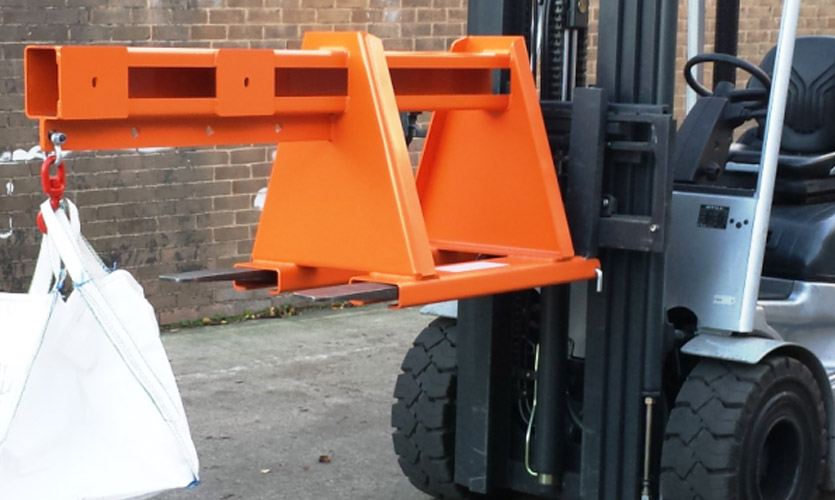
A jib attachment is similar to a lifting arm that is mounted on the forks of a forklift. Usually there should be a hook or shackle on the end. This enables operators to lift loads that are unable to sit close to the forks.
Instead of trying to jam weird things onto pallets, a jib allows you to hoist and suck them without damage. The TMA is recommended for industries with irregular shape and weighing load.
Why Standard Forks Fall Short?
Forklifts are typically designed for pallet loads. But many places of employment handle things that do not fall into this pattern.
Common challenges include:
- Long items such as pipe or timber
- Uneven weight distribution
- Fragile or high-value machinery
- Loads that require precise positioning
Attempting to raise these with conventional forks makes it likely that they will slip, tilt, or otherwise damage. This is where forklift jib attachments can serve as a safer way to achieve the same result.
The Forklift Jib: 5 Key Safety Advantages
Safety is improved in multiple ways with use of a jib attachment. It also gives operators more control and eliminates the need for some potentially dangerous adjustments.
-
Better Load Stability
The jib is used to safely hang loads on a hook. This balances the weight and keeps it centred while you move.
-
Improved Visibility
Operators can better see where they are positioning loads than if bulky items on forks block their view.
-
Reduced Manual Handling
At a widget factory, workers no longer have to manually push or reposition heavy objects. This will reduce the risk of injury.
-
Precise Placement
Jibs help better position loads right where you need them, in tight or elevated areas.
Types of Forklift Jib Attachments
Forklift jib attachments are not identical. Which one is right for you depends on your work environment and load type.
Fixed Jib
- Simple and strong design
- Ideal for repetitive lifting tasks
Adjustable Jib
- Extendable arm for all reach needs
- Offers more flexibility on site
Telescopic Jib
- Adjustable length with multiple positions
- Also fit for different size loads and distances
There is a distinct purpose for each jib attachment type. Choose the wrong one, and you can lose out on efficiency and safety.
How to Use a Jib Safely?
That doesn’t mean that they will actually be used properly. Here are some essential safety practices to follow when using forklift jib attachments:
- Check the load capacity every time before lifting
- Attach it firmly to the forks
- Check hooks and chains for wear
- Maintain loads at steady state and do not create shocks
- Trained and aware of limits for operators
It is not just the tool that makes it safe. It depends on how it is used.
When to Up Jib?
When your business frequently deals with long or irregular loads, a jib attachment is not optional; it’s vital.
You might need one if you:
- Lift pipes, beams, and frames regularly
- Move machinery or engine parts
- Improve your accuracy within limited spaces
- Have a team that wants to reduce manual handling risks
For paid businesses, forklift jib attachments investment results in reduce accidents, improve the procedure, and less damage.
Final Thoughts
It is possible to perform awkward loads without risk. In this way, businesses are able to lift smarter and safer with the right forklift jib attachments. These tools enhance a forklift’s capabilities while ensuring safety for workers and materials alike.
Adding a reliable jib attachment could be one of the most practical upgrades you make if your operations involve shipping irregular or oversized items.


